Nilofar Ayoubi survived the Taliban twice. The second time, she said “I am waiting for my death.” Today, from exile in Poland, she is an Advisory Member of the Afghan Girls Initiative and she is not done yet.
She learned early that survival required disguise.
Growing up in Afghanistan, Nilofar Ayoubi dressed as a boy to go to school. It was the only way. The Taliban were everywhere, and girls who wanted an education had to become invisible to get one. She learned to walk differently. To keep her eyes down. To become someone she was not in order to become who she was meant to be.
That early encounter with the Taliban, violent, personal, and permanent, did not break her. It made her.
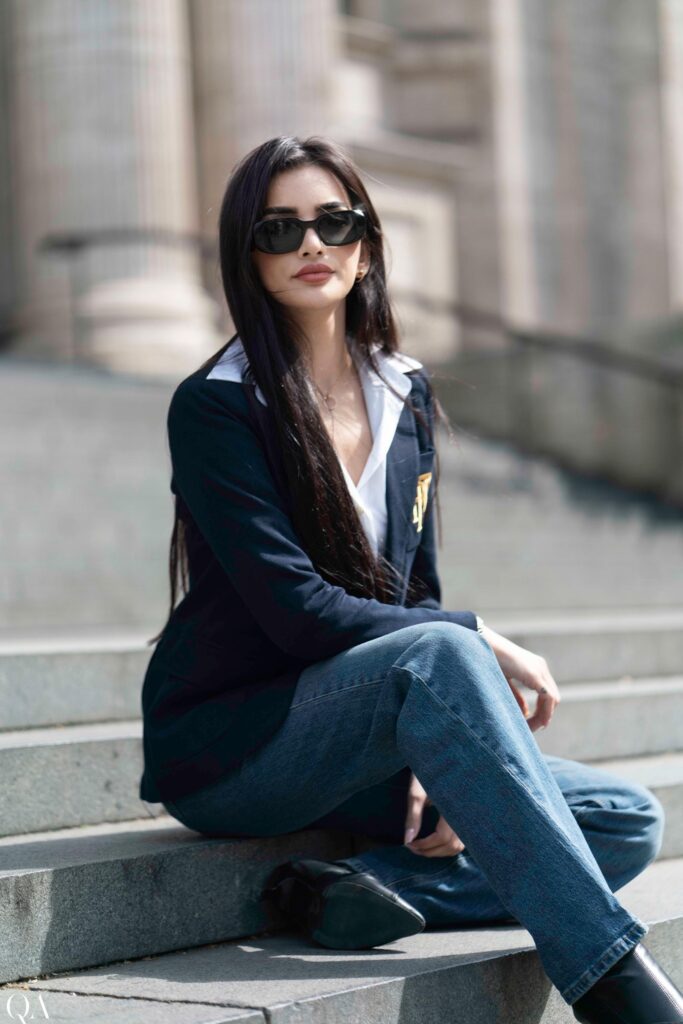
“I was forced to disguise myself as a boy just to access education and Experience life like a normal Humanbeing,” she has said. What she does not say, but what her entire life demonstrates, is that the experience did not make her smaller. It made her impossible to stop.
From Kabul to Warsaw
By the time the Taliban returned to power in August 2021, Nilofar Ayoubi was already one of Afghanistan’s most prominent women’s rights defenders. She had founded businesses that employed hundreds of women. She had built the Women’s Political Participation Network, bringing together women from across Afghanistan’s ethnic and political divides to fight for equal representation. During the COVID-19 pandemic, she had coordinated humanitarian assistance for more than 15,000 families in western Kabul. She had survived a targeted violent attack in 2020, not despite her activism, but because of it.
When the Taliban took Kabul, she became an immediate high-profile target.
In one of her final interviews before evacuation, she said something that has stayed with everyone who heard it: “I am waiting for my death.”
She was relocated to Poland under an emergency protection program. She arrived with her life and her conviction intact.
Since then, she has not slowed down for a single day.
Building in Exile
There is a version of this story that ends with escape — with survival as its own conclusion. Nilofar Ayoubi does not accept that version.
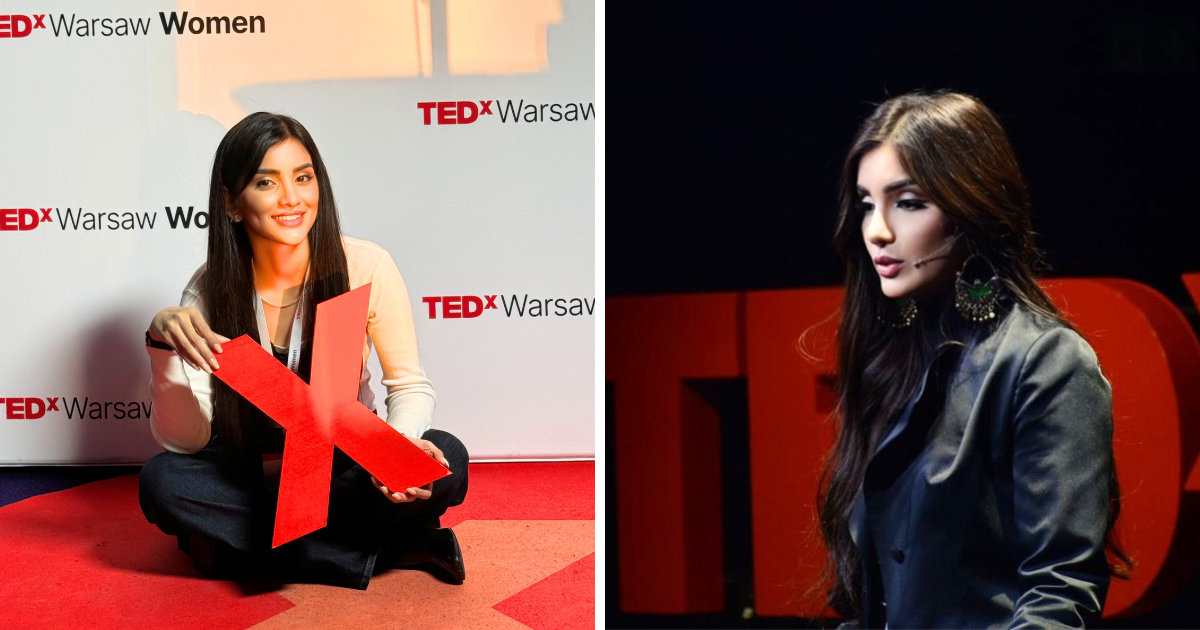
From Warsaw, she has built Armaan Group of Companies and the Rumi chain of Afghan restaurants, creating employment for refugees while bringing Afghan culture to European audiences. She continues as CEO of Asia Times Afghanistan and Editor at Akhbar-Alan, ensuring that independent reporting on Afghanistan does not disappear simply because the reporters had to leave. She has spoken at TEDx Warsaw Women and TEDxKazimierz. She has collaborated with the UN Special Rapporteur on Afghanistan and with European institutions and policymakers to advance accountability for gender-based persecution.
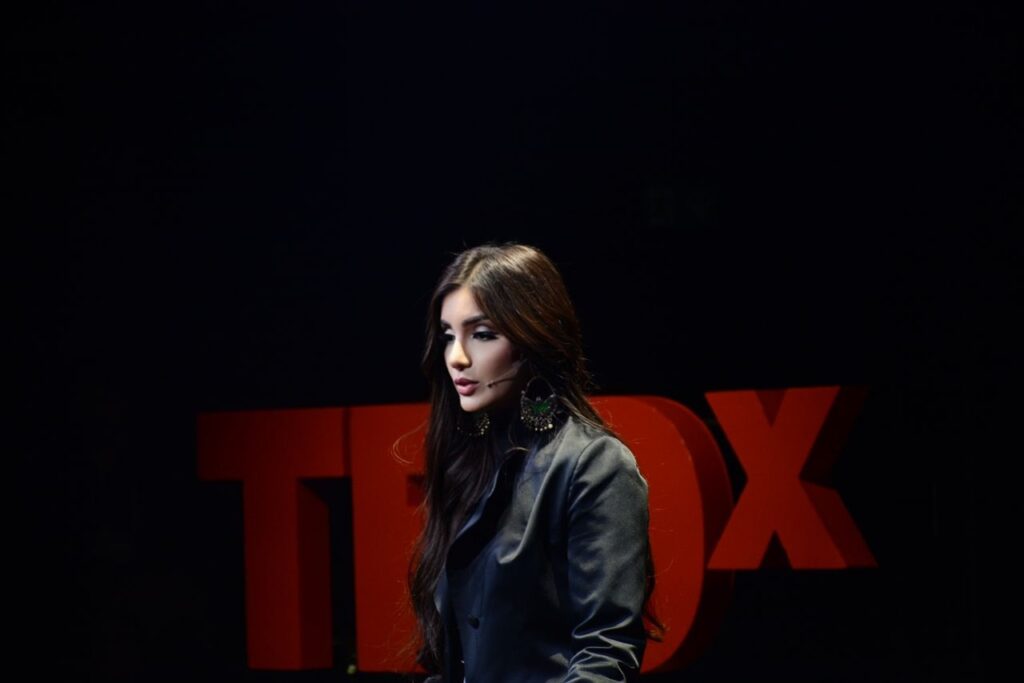
She is a Leadership Council Member of the World Liberty Congress, working alongside democracy leaders and dissidents from more than sixty countries living under authoritarian rule. She is a member of the United Against Gender Apartheid campaign, advocating for the recognition of gender apartheid as a crime under international law.
In Poland, she was named among Pulse Biznesu’s Top Three Businesswomen in the European Union.
She did all of this in exile. She did all of this while carrying the weight of what she left behind.
Why She Joined the Afghan Girls Initiative
When Nilofar heard about the Afghan Girls Initiative, she understood it immediately. “I am honoured by the invitation and would be delighted to join the Afghan Girls Initiative as an Advisory Member,” she said. “I look forward to contributing to this important work and supporting the mission in any way I can.”
Earlier this year, Hear Her Stories surveyed 219 Afghan girls across multiple provinces. They told us exactly what they needed — English, coding, journalism, digital skills, business, public speaking. They were not vague. They were not passive. They were planning, precisely, for futures that the Taliban had declared illegal.
One in four said the same thing: they simply did not know where to start.
That answer, not a lack of will, not a lack of intelligence, but the absence of a guide is the gap the Afghan Girls Initiative was built to close. We connect Afghan women living abroad with girls still inside Afghanistan. One private conversation a week for eight weeks. The kind of mentorship that travels across the world’s most heavily enforced borders through nothing more powerful than trust and a phone.
Nilofar joins as an Advisory Member because she has lived both sides of that story. She was once the girl inside Afghanistan who had to disguise herself to learn. She is now the woman outside Afghanistan who refuses to stop fighting for the girls who are still there.
“The struggle does not end with survival,” she has said. “It begins again, somewhere else, on behalf of those who could not leave.”
The Advocacy Layer
What Nilofar brings to the Afghan Girls Initiative goes beyond mentorship.
The stories and data we collect after every cohort — anonymous, protected, real — are not just program documentation. They are evidence. Evidence of what gender apartheid looks like in practice, not in policy papers. Evidence that belongs in front of the UN, the EU, and every human rights body with the power to act on it.
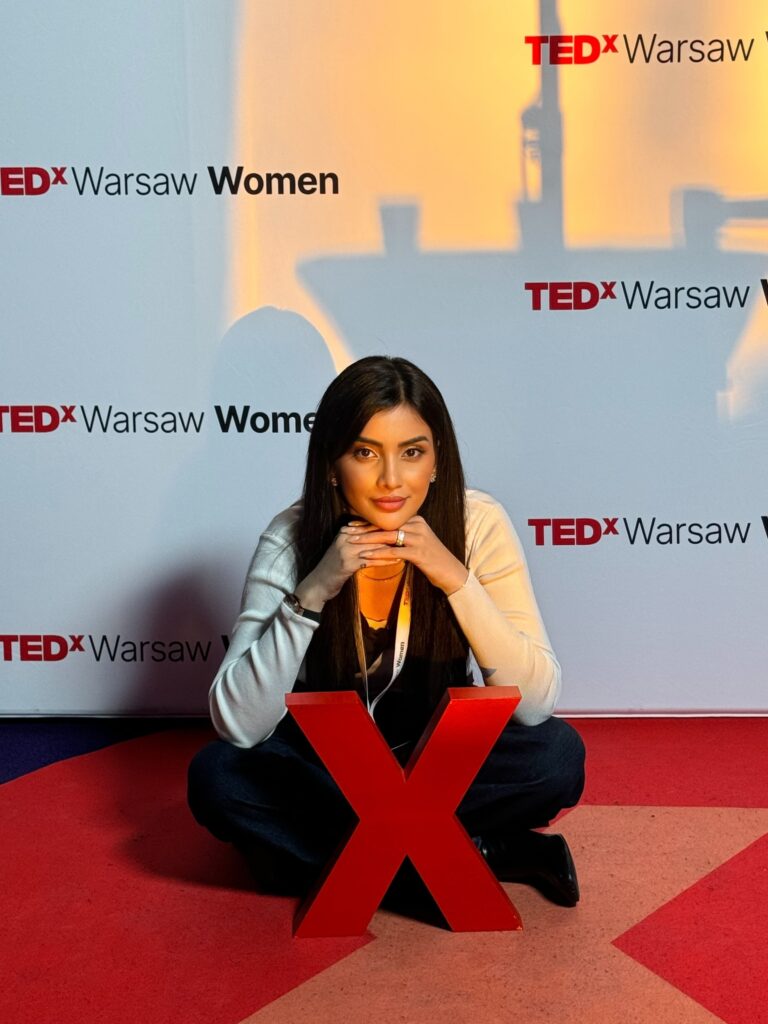
Nilofar knows exactly how those institutions work and exactly how to make evidence move within them. She has collaborated with the UN Special Rapporteur on Afghanistan. She has addressed European policymakers. She has advocated at international forums for the recognition of gender apartheid as a crime under international law. She understands the distance between a girl’s story and a legislative outcome — and she knows how to close it.
That bridge is what she is here to build.
What She Carries
Nilofar Ayoubi carries something that cannot be taught and cannot be faked: the knowledge of what it costs to be a woman in Afghanistan and the refusal to let that cost go unaccounted for.
She dressed as a boy to go to school. She built businesses under threat. She survived an attack. She said “I am waiting for my death” and then she left and then she kept going.
The Afghan Girls Initiative exists because 219 girls told us they are ready. Nilofar Ayoubi is one of the reasons we believe in them.