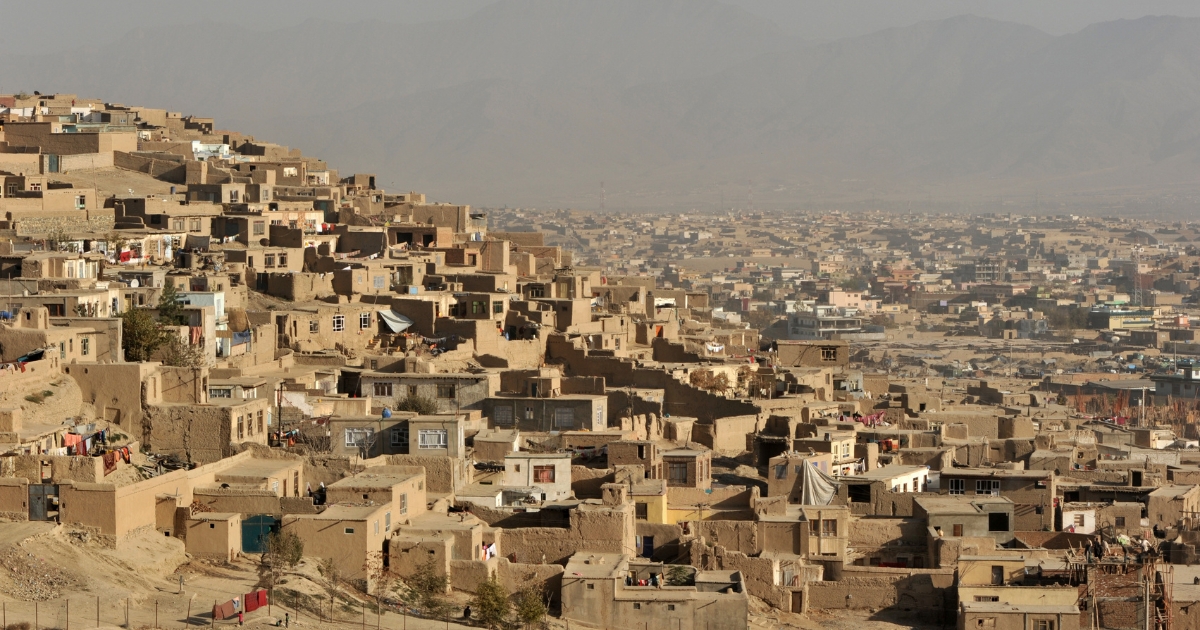
“I studied hard to reach university, but now I’m sitting at home with no direction.” This is a short note submitted alongside a survey response by a young woman living in Herat. She is one of the 299 Afghan girls and women who participated in Hear Her Stories’ survey, conducted across multiple provinces in Afghanistan, as well as among Afghan women and girls living in countries such as Iran, Turkey and beyond.
What this survey revealed is that this is not a story of despair. It is a story of determination with nowhere to go.
It is the story of young girls and women who have not stopped learning, but who have no one and no resources to help them figure out what their next step should be.
Taliban’s Takeover
When the Taliban took power in Afghanistan in August 2021, one of their first measures was to shut down schooling for women and girls. Secondary schools closed in the weeks that followed, and women were banned from attending universities. Girls over sixth grade were constitutionally excluded from public schools, making Afghanistan the only country in the world where girls are legally banned from secondary education.
The United Nations has described this situation as gender apartheid. How can a girl prepare for a profession if she is not allowed to attend school? How can a girl build a career if she is not allowed to go to university?
Over time, an entire generation finds itself shut out from the systems and structures that help people understand what is possible for their lives.
But this survey told us something else: these young women and girls do not accept what is happening to them, and they are looking for a way out of all this.
As one survey participant put it, “Even if I have the internet, I don’t know what to study or where to begin.”
What 219 Girls Told Us
The majority of responders (42.5 percent) were between the ages of 19 and 24, followed by those aged 15 to 18, who accounted for 33.3 percent. Geographically, 33.3 percent came from Herat and 27.9 percent from Kabul, with others coming from Mazar-e-Sharif, Ghazni, Baghlan, Kunduz, Daikundi, and numerous minor provinces, as well as Iran, Turkey, London, and Sweden.
Their educational levels were higher than many would imagine. Nearly half, 49.3 percent, had completed secondary education when the bans went into place, with another 33.3 percent having attended university.
These are young girls and women who have the talent, skills and potential to do so much, but their path, their future and their dreams have been held back by the Taliban.
Before the Taliban closed the doors, 82.8% of respondents had completed secondary school or had graduated from university. Most people had some kind of access to technology. More than two-thirds had a smartphone, and over 70% said they used the internet every day.
The basic things for online learning seem to exist, however a device alone is not enough to facilitate education. Many of these girls and women find themselves caught in between holding a phone and knowing what to do with it.
The Real Barrier Is Not a Device
When asked about the most major obstacles to online learning, 36.5 percent pointed to a lack of devices or reliable internet access, while 15.5 percent cited power outages. Household duties limited 8.7 percent of respondents, while family restrictions created further barriers for 4.1 percent.
However, the second most common response, selected by 28.8 percent of participants, had nothing to do with technology. More than one in four girls said that their biggest obstacle is simply not knowing where to begin. And when someone does not even know what their first step should be, giving them a new phone or a better internet connection does not solve the problem.
The challenge is that this generation has been systematically cut off from teachers, institutions and other women who could have shown them what is possible, shared their own experiences and helped them understand what their next step should be.
The reality is that these people do exist, both inside and outside Afghanistan. But these girls often have no way of reaching them.
“I want to learn so I can support myself and not depend on anyone,” said one of the respondents.
What They Want to Learn
English was the most requested skill, chosen by 40.6 percent of respondents, who see fluency as a way into international platforms, remote work, and education abroad. Digital literacy came next at 13.3 percent, then graphic design at 12.3 percent, and coding and programming at 10.5 percent. Entrepreneurship, journalism, online teaching and AI skills were also among the responses.
50.2% want to continue their education. Another 30.1% aim to earn income online and become financially independent.
When asked what they hoped learning would give them, half said they wanted to continue their education and nearly a third said they wanted to earn money online rather than depend on others. A smaller group said what they were really after was confidence, and the sense that their lives still belonged to them.
What becomes clear from all of these responses is that these girls have not given up on their dreams.
How They Want to Learn
Nearly 60 percent said they wanted live classes with a teacher, a real person who could respond to them in the moment, rather than videos or reading materials. Another 22.4 percent preferred lessons through WhatsApp or Telegram. The conditions they said would make learning most accessible were free internet, access to a laptop or tablet, safe and flexible timings, and lessons in Dari or Pashto.
They all are looking for something that is practical given their everyday realities.
The Commitment Is Already There
Nearly half said they could study between two and five hours per week, another 28.8 percent said five to ten, and 8.7 percent said more than ten. That kind of commitment matters in a country where power outages are common, women perform the majority of household chores, and sitting down to study is taking a big risk. So the girls don’t lack motivation; they need someone who is prepared to meet them where they are.
What Hear Her Stories Is Doing
Hear Her Stories developed a mentorship program in direct response to what the survey showed. Ten Afghan women living abroad will be connected with ten girls still inside Afghanistan, for one private conversation per week over eight weeks, in Dari or Pashto, through whichever platform is safest for each participant. This does not require a curriculum or a formal program. It starts with one woman who has found her way reaching out to another who is still trying to find hers.
Each participant’s safety is checked before any contact is made, and all conversations are kept completely private. The goal is to break the isolation that the survey identified, again and again, as the deepest obstacle these girls face. To provide a young woman in Herat or Kabul the opportunity to speak with someone who has been in her situation and found a way out. In a country where women have been cut off from institutions, society at large, and from the women who came before them, that conversation is not a small or trivial thing.